
How to Choose the Right Basement Drainage System in Youngstown for Effective Waterproofing
Basement drainage systems are engineered solutions that collect and redirect subsurface and surface water away from a building’s foundation to prevent seepage, flooding, and mold, and in Youngstown they are a frontline defense against local weather and soil stresses. This guide explains what basement drainage is, why Youngstown’s precipitation patterns and clay soils increase hydrostatic pressure on foundations, and how the right system prevents structural damage and indoor air-quality problems. You will learn to compare interior and exterior systems, understand the role of sump pumps and battery backups, evaluate common costs, and follow a maintenance schedule that extends system life. The article maps the decision process into clear sections: definitions and local drivers, types of systems and a comparison table, a homeowner checklist for choosing a system, installation and maintenance steps with a maintenance table, benefits and value, and realistic cost ranges for Youngstown properties. Throughout, keywords like youngstown basement drainage systems and Youngstown basement waterproofing appear in context to help you match local conditions to solutions and decide when to call a professional.
What Are Basement Drainage Systems and Why Are They Essential in Youngstown?
Basement drainage systems are combinations of channels, perforated pipe, aggregate, and pumps designed to manage groundwater and surface runoff so hydrostatic pressure no longer forces water through foundation walls or floors. They work by collecting water where it accumulates—either inside along the footing or outside at the footing—and moving it to a safe discharge point, reducing dampness, efflorescence, and flood risk. In Youngstown, high annual precipitation and heavy clay soils intensify groundwater buildup and freeze-thaw cycles, making properly designed drainage essential for long-term foundation health and mold prevention. Below are the primary problems these systems address and how they operate at a basic level before we move into system types and local considerations.
- Damp or wet basement walls during heavy rain or spring thaw, indicating groundwater pressure against the foundation.
- Efflorescence and white mineral deposits on masonry, showing persistent moisture migration through concrete.
- Foundation cracks or hairline seepage where hydrostatic pressure finds weak points in the wall or slab.
- Musty odors and visible mold growth resulting from chronic humidity and condensation in finished or unfinished basements.
How Does Youngstown’s Climate and Soil Affect Basement Water Problems?
Youngstown experiences precipitation levels that promote surface runoff and sustained groundwater elevation, and widespread clay-rich soils slow infiltration and expand when wet, increasing lateral pressure against foundations. Clay’s low permeability means rainwater stays near the surface longer and elevates the local water table during prolonged wet periods, which raises hydrostatic pressure and forces water through pores and cracks in foundation materials. Freeze-thaw cycles further aggravate cracks, widening pathways for water and accelerating deterioration of sealants and membranes. Understanding these local soil and climate mechanics clarifies why many Youngstown basement drainage systems prioritize reliable collection and active removal rather than passive barriers alone.
These soil and climate dynamics lead directly into the common water issues homeowners see and the types of systems that address them.
What Common Basement Water Issues Do Youngstown Homes Face?
Youngstown homes commonly show early-stage water intrusion symptoms such as damp spots, peeling paint, and efflorescence, which signal moisture migration even before visible pooling appears. Structural signs include diagonal foundation cracks or vertical wall cracks that can indicate shifting soils and uneven hydrostatic force distribution; these require timely evaluation to prevent escalation. Interior finishes suffer when carpeting, drywall, and stored belongings are exposed to humid conditions and occasional flooding, increasing mold risk and degrading indoor air quality. Recognizing these symptoms early helps homeowners decide whether monitoring, interior drainage, exterior remediation, or foundation crack repair is the right next step.
Identifying symptoms informs the next section on which drainage system types are most effective for Youngstown properties.
What Types of Basement Drainage Systems Are Best for Youngstown Homes?
Basement drainage solutions fall into three main categories—interior drainage, exterior drainage (including exterior French/footing drains), and sump pump systems—each addressing different sources of water and degrees of severity. Interior systems collect water that breaches or seeps into the basement and channel it to a sump pit; exterior systems stop water before it reaches the foundation by improving perimetric drainage and grading; sump pumps actively remove collected water to a safe discharge point, often with battery backup for power outages. The choice depends on the water source (groundwater vs surface runoff), whether the basement is finished, and the extent of foundation issues.
What Are Interior Drainage Systems and Their Benefits?

Interior basement drainage systems, often called interior French drains or perimeter interior drains, are installed along the inside footing to intercept groundwater that has penetrated through or under the slab and convey it to a sump pit. Installation requires a narrow trench along the floor perimeter, a perforated pipe surrounded by aggregate and filter fabric, and a sump pump to remove the collected water; they are less disruptive to landscaping and well-suited for finished basements or retrofits. Interior systems are effective at relieving hydrostatic pressure and preserving interior finishes when installed correctly, and routine maintenance focuses on sump pump care and keeping the pit clear. YLM Basement Waterproofing installs and services interior perimeter drains for Youngstown properties, combining system installation with recommended maintenance plans to prolong performance.
This explanation leads into exterior systems, which approach the problem from the outside.
How Do Exterior Drainage Systems Protect Your Basement?
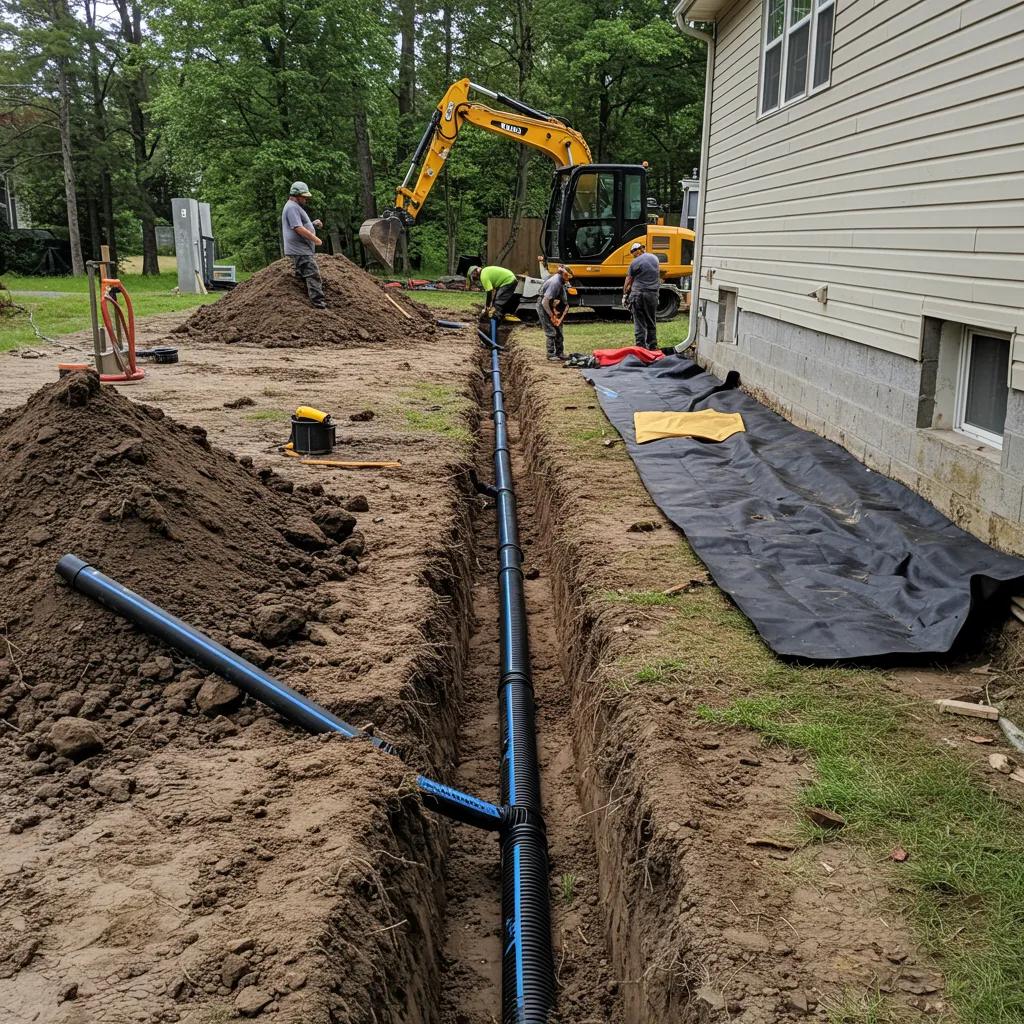
Exterior drainage systems—exterior French drains, footing drains, and waterproof membranes—work by preventing water from accumulating at the foundation line and by directing surface and subsurface water away from the house before it exerts pressure on the walls. These installations typically involve excavation to the footing level, placement of filter fabric, aggregate, and perforated pipe, and may include applied waterproof membranes to the foundation wall; they are commonly selected during major exterior renovations or on new construction when full access is available. Exterior solutions often have longer lifespans and fewer interior impacts but involve higher upfront cost and more landscape disruption, and they can be combined with grading adjustments for best results. YLM Basement Waterproofing has experience coordinating exterior drainage work for Youngstown conditions when exterior access and project budgets allow.
Having covered exterior options, the next subsection explains why sump pumps are a critical component.
Why Is Sump Pump Installation Important for Basement Waterproofing?
Sump pumps are active devices that remove water collected by interior or foundation drains, discharging it away from the structure to prevent re-entry and reduce hydrostatic pressure during storms and spring thaw. There are submersible and pedestal pumps, and adding a battery-backup sump pump is especially important in Youngstown where storms and power outages can coincide; backup systems prevent failures when they are most critical. Key maintenance items include annual testing, float switch inspection, and ensuring discharge lines remain clear and directed away from the foundation; neglected pumps are the most common failure point in otherwise well-designed systems. YLM Basement Waterproofing offers sump pump installation and inspection services to ensure that sump systems meet local demands and include recommended redundancy for reliability.
Now compare these approaches by cost, disruption, and effectiveness for practical decision-making.
How Do Interior and Exterior Drainage Systems Compare in Cost and Effectiveness?
Choosing between interior and exterior drainage requires weighing cost, disruption, and the root cause of water intrusion: interior systems are typically less expensive and less disruptive and suit finished basements and retrofit scenarios, while exterior systems address surface and shallow groundwater at the source but cost more and require excavation. Effectiveness depends on the water source—interior systems handle groundwater that has passed the wall or slab, while exterior systems reduce the volume of water reaching the foundation in the first place; combined approaches often yield the most durable results. The table below summarizes these trade-offs to help Youngstown homeowners match scope and budget to likely outcomes.
This comparison clarifies trade-offs and segues into how to choose the right system for your specific Youngstown property.
How Do You Choose the Right Basement Drainage System for Your Youngstown Property?
Selecting the right system combines diagnosis of the water source with practical constraints like finished interiors, budget, and desired longevity; start by identifying where the water comes from and whether the basement is a finished living space. A structured checklist helps homeowners prioritize interventions, balancing immediate needs against long-term prevention and potential structural repairs. Below is a prioritized checklist of decision factors to guide a self-assessment before scheduling a professional evaluation.
Key decision factors to consider:
- Water origin: Determine whether water is entering from the floor, walls, or surface runoff; this directs interior vs exterior choices.
- Finished vs unfinished basement: Finished spaces often favor interior drainage to limit disruption while preserving living areas.
- Soil and grading: Clay soils and poor exterior grading usually necessitate more robust drainage or exterior remediation.
- Structural issues: Visible foundation cracks or bowed walls increase the need for comprehensive solutions, possibly including foundation crack repair.
- Budget and long-term value: Compare short-term fixes to long-term systems that reduce maintenance and increase resale confidence.
- Power reliability: If power outages are common during storms, include battery-backup sump pumps to maintain protection.
What Key Factors Should Influence Your Basement Drainage Choice?
A successful selection starts with understanding the primary water trigger—surface runoff from gutters and grading, or rising groundwater and hydrostatic pressure—and matches the remedy to that cause. Consideration of finished interiors matters because interior systems minimize exterior disturbance, while exterior systems offer preventive control and are more appropriate when grading or exterior infiltration is the root cause. The home’s age, foundation material, and any history of foundation repairs or crawl space issues should influence the scope of work and whether complementary services like foundation crack repair or crawl space encapsulation are required.
These factors frame the specific signs that indicate immediate intervention, discussed next.
What Are the Signs You Need Basement Drainage in Youngstown?
Recognizing the early warning signs of water intrusion allows timely intervention and reduces repair costs; these signs are actionable and help prioritize interior vs exterior fixes. The list below presents the most common indicators homeowners should watch for, each with a short diagnostic cue.
- Damp walls or floors: Persistent moisture spots after rain suggest groundwater pressure at or below the footing level.
- Efflorescence on masonry: White mineral deposits indicate long-term moisture migration through concrete or block.
- Musty odors or visible mold: Chronic humidity or intermittent flooding supports mold growth, affecting indoor air quality.
- Foundation cracks or leaking seams: Active seepage through cracks often requires both drainage and foundation crack repair.
Seeing one or more of these signs should prompt a professional assessment to determine the proper system and scope.
Why Is a Professional Assessment Crucial Before Installation?
A professional assessment uses moisture mapping, grade and gutter inspection, and structural evaluation to diagnose the water source and recommend a targeted solution; this avoids unnecessary work and helps prioritize the most cost-effective remedies. Pros can distinguish between surface runoff and hydrostatic pressure, determine whether foundation crack repair is needed, and calculate pump capacity and discharge needs for reliable performance in Youngstown conditions. Relying on proper diagnostics also informs realistic cost estimates and warranty options, and it reduces the risk of repeated failures due to misdiagnosis. YLM Basement Waterproofing provides assessments and tailored recommendations for Youngstown homeowners, ensuring the selected plan addresses both symptoms and root causes.
Accurate assessment informs the installation approach and the maintenance practices that follow.
What Is the Installation Process and How Do You Maintain Basement Drainage Systems?
Professional installation follows a predictable workflow: inspection and diagnosis, system design, excavation or trenching if needed, placement of pipe and aggregate, sump pit and pump installation, backfill and surface restoration, then testing and commissioning. Quality markers include proper slope and pitch for discharge lines, correct use of filter fabric to prevent clogging, and verified pump capacity with float switch calibration; these steps ensure the system relieves hydrostatic pressure and maintains reliable discharge away from the foundation. Regular maintenance extends system life and prevents failures—maintenance tasks include sump pump testing, gutter cleaning, discharge line inspection, and occasional pit cleaning.
Below is a practical maintenance schedule to help homeowners maintain drainage systems and detect issues early.
Following the schedule above prevents common failures and reduces long-term maintenance costs; the next paragraph covers what to expect during the actual installation steps.
What Does Professional Basement Drainage Installation Involve?
Typical professional installation begins with a full site inspection and diagnostic testing to document moisture sources and structural conditions, followed by a written scope that identifies interior or exterior work. For interior systems the crew cuts a trench along the perimeter floor, installs perforated pipe and aggregate, connects to a sump pit and pump, then restores the floor; exterior installations require excavation to the footing, placement of drains and membranes, and re-seeding or landscaping afterward. Installation timelines vary from a day or two for simple interior drains to several days for exterior work, and quality checks include pump testing, discharge verification, and a final inspection for correct slope and filter fabric placement. Proper installation reduces callbacks and maximizes system longevity when paired with scheduled maintenance.
This leads into a description of how maintenance keeps systems performing for years.
How Can Regular Maintenance Extend the Life of Your Drainage System?
Regular maintenance addresses the most common causes of failure—pump wear, clogged discharge lines, and neglected gutters—by ensuring each component operates before the rainy season or freeze-thaw cycles begin. Simple homeowner checks include quarterly pump testing (pouring water into the pit), ensuring discharge lines are unobstructed and routed away from the foundation, and cleaning gutters twice yearly to minimize surface runoff into foundation zones. Professional inspections annually can catch early sediment buildup, wear on float switches, or signs of foundation movement that require prompt repair. Taken together, these tasks preserve functionality, limit emergency repairs, and support warranty compliance.
Maintaining systems yields benefits across structural protection and indoor air quality, described next.
What Are the Benefits of Effective Basement Drainage for Youngstown Homeowners?
Effective basement drainage protects a home’s structure by reducing hydrostatic pressure, minimizing water-related deterioration, and preserving the integrity of finishes and stored contents; this directly reduces repair costs and increases usable living space. Dry basements lower humidity and reduce mold growth, improving indoor air quality and occupant health; paired with dehumidification, drainage forms the baseline for a safe, comfortable basement environment. Financially, well-documented waterproofing and drainage work improves buyer confidence and can enhance resale value by mitigating perceived flood risk during inspections.
How Does Proper Drainage Prevent Water Damage and Structural Issues?
Drainage systems relieve hydrostatic pressure—the lateral force that groundwater exerts on foundation walls—which otherwise promotes seepage, cracks, and gradual movement in the foundation assembly. By intercepting and removing groundwater, interior perimeter drains and exterior footing drains convert a reactive problem into a managed condition, preventing moisture-driven expansion and freeze-thaw damage that worsen cracks over time. This mechanical relief preserves wall plumbness and reduces the likelihood of costly foundation repairs, making drainage a preventive investment in structural resilience. The result is less water intrusion, fewer structural interventions, and longer life for foundation materials.
These structural protections also support healthier indoor environments.
How Does Basement Drainage Improve Indoor Air Quality and Mold Prevention?
Moisture control is the primary determinant of mold risk; kept dry, basement surfaces do not support sustained microbial growth, which translates to lower allergen loads and improved air quality for occupants. Effective drainage reduces relative humidity and the frequency of condensation events, making dehumidifiers and HVAC integration more efficient and less prone to overwork. Limiting wet cycles also protects wood, drywall, and stored items from mold colonization and decay, yielding tangible health and cost benefits for homeowners. A coordinated approach—drainage plus ventilation and dehumidification—offers the best defense against mold in Youngstown basements.
Improved physical conditions can also influence property value and buyer perception.
How Can Basement Waterproofing Increase Your Property Value?
A documented, functioning drainage and waterproofing system preserves interior finishes, reduces visible signs of water damage, and lowers perceived risk for potential buyers, which can make a property more marketable. Buyers value dry, usable basement space and are often willing to pay a premium for homes with clear evidence of effective moisture control and maintenance records; insurers and inspectors typically note decreased risk when proper drainage is present. While ROI varies by neighborhood and scope, the combination of reduced repair costs, extended usable square footage, and improved buyer confidence makes drainage and waterproofing a defensible investment in Youngstown homes.
The following section provides practical cost expectations and what drives price variation.
How Much Does Basement Waterproofing and Drainage Cost in Youngstown?
Basement waterproofing and drainage costs in Youngstown vary widely based on system type, extent of excavation, required foundation repairs, and optional add-ons such as battery backups and dehumidifiers; typical projects range from modest interior fixes to full exterior remediation and foundation repair. Low-scope interior fixes and sump pump installations address spot problems with lower disruption and cost, while full exterior French drain installations and foundation repair command higher budgets due to excavation and restoration work. Below is a concise cost breakdown to help homeowners estimate budget ranges and prioritize scope before scheduling professional bids.
These ranges reflect common scenarios; the next subsection explains how add-ons and conditions influence overall cost.
What Is the Typical Cost Range for Basement Drainage Systems in Youngstown?
Small repairs and targeted interior interventions fall at the lower end of the range, often starting around $1,500 for spot fixes and basic sump pump upgrades, while a comprehensive interior French drain with a reliable sump pump typically occupies a mid-range budget. Full exterior drainage projects that require excavation to the footing and landscaping restoration represent higher-cost options because of material, labor, and restoration complexity; these are frequently necessary when poor grading or surface runoff is the primary cause. Costs rise further if foundation crack repair or crawl space encapsulation is required concurrently, and adding battery backups, high-capacity pumps, or dehumidifiers increases upfront expense while improving long-term resilience.
The increasing frequency and severity of urban flooding events across North America have led to more frequent basement flooding, property damage, and insured losses. These events are influenced by various factors, including urbanization, land-use, watershed characteristics, and municipal stormwater management. Fortunately, building- and lot-scale mitigation techniques can significantly reduce basement flooding risks for individual homes.
How Do Different Systems and Services Affect Overall Costs?
Primary cost drivers include excavation depth and area, the need for foundation repairs, pump capacity and backup systems, and whether the home has a finished basement requiring careful interior restoration. Optional services—battery-backup sump pumps, professional dehumidifiers, extended warranties, and routine maintenance plans—add to the initial investment but reduce the probability of emergency repairs and system failures. When comparing quotes, factor in the contractor’s diagnostic thoroughness, warranty terms, and whether the proposal addresses both symptoms and root causes to avoid repeated expenditures.
For professional help and an accurate, site-specific estimate, consider scheduling an assessment; YLM Basement Waterproofing offers localized evaluations and tailored recommendations for Youngstown homeowners seeking durable drainage solutions and long-term results.
For a professional assessment and personalized plan for your Youngstown basement drainage needs, contact YLM Basement Waterproofing for an inspection and recommendation tailored to local soil and weather conditions.
Frequently Asked Questions
What are the signs that indicate a basement drainage system is needed?
Homeowners should be vigilant for signs of water intrusion, such as damp walls or floors, efflorescence on masonry, musty odors, and visible mold growth. These indicators suggest that moisture is present and may lead to more significant issues if not addressed promptly. Additionally, foundation cracks or leaking seams can signal the need for both drainage solutions and potential structural repairs. Recognizing these signs early allows for timely intervention, reducing repair costs and preventing further damage.
How often should I perform maintenance on my basement drainage system?
Regular maintenance is crucial for the longevity and effectiveness of your basement drainage system. Homeowners should test sump pumps quarterly, ensuring they operate correctly and that discharge lines are clear. Gutters and downspouts should be cleaned twice a year to prevent overflow and ensure proper drainage away from the foundation. Additionally, an annual inspection of the entire system, including checking for sediment buildup and structural integrity, can help catch potential issues before they escalate into costly repairs.
Can I install a basement drainage system myself, or should I hire a professional?
While some homeowners may consider DIY installation of a basement drainage system, it is generally advisable to hire a professional. Experts can accurately diagnose the source of water intrusion and recommend the most effective solution tailored to your specific situation. Professional installation ensures that the system is designed and installed correctly, reducing the risk of future failures. Additionally, professionals can provide valuable insights into local soil conditions and climate factors that may affect system performance.
What is the average lifespan of a basement drainage system?
The lifespan of a basement drainage system can vary significantly based on the type of system and maintenance practices. Interior drainage systems typically last between 10 to 25 years, while exterior systems can last 20 to 40 years with proper care. Sump pumps generally have a shorter lifespan, averaging 5 to 15 years, depending on usage and maintenance. Regular inspections and timely repairs can extend the life of these systems, ensuring they function effectively for years to come.
How do I choose between interior and exterior drainage systems?
Choosing between interior and exterior drainage systems depends on several factors, including the source of water intrusion, the condition of your basement, and your budget. Interior systems are often less disruptive and suitable for finished basements, while exterior systems address water before it reaches the foundation and are ideal for severe infiltration issues. Assessing the specific water sources, soil conditions, and your long-term goals will help guide your decision. Consulting with a professional can provide additional clarity on the best option for your home.
What additional features can enhance my basement drainage system?
To improve the effectiveness of your basement drainage system, consider adding features such as battery backup sump pumps, which provide protection during power outages, and dehumidifiers to control humidity levels. Installing a vapor barrier in crawl spaces can also prevent moisture from seeping into the basement. Regular maintenance plans and warranties can further enhance system reliability and longevity, ensuring that your home remains protected from water damage over time.
Conclusion
Choosing the right basement drainage system in Youngstown is essential for protecting your home from water damage and maintaining a healthy living environment. By understanding local soil conditions and climate impacts, homeowners can select effective solutions that enhance structural integrity and indoor air quality. Don’t wait for water issues to escalate; take proactive steps to safeguard your property today. Contact YLM Basement Waterproofing for a personalized assessment and tailored recommendations that meet your specific needs.